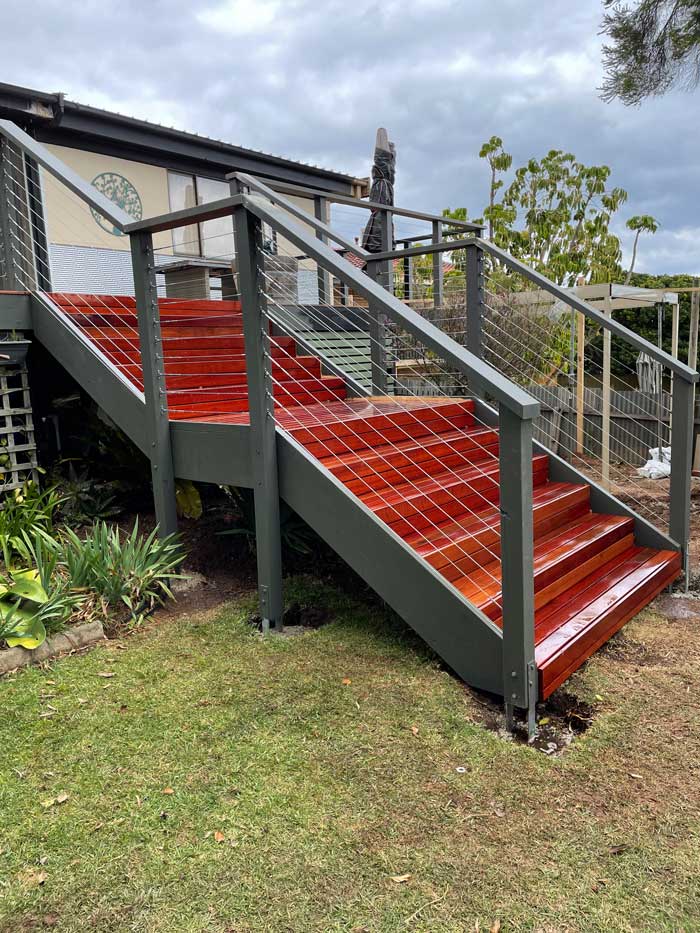
Exterior stairs are exposed to rain, temperature changes, foot traffic, soil movement, and repeated loading. Small defects can therefore worsen faster than similar problems indoors. Effective exterior stair maintenance focuses on stable treads, secure rails, sound landings, drainage, and the framing that supports the entire stair assembly.
A short inspection can catch many problems before they become obvious trip or fall hazards.
Test Treads Without Overloading Them
Walk the stairs normally and notice whether any tread rocks, flexes, or makes a new sound. Look for split boards, loose fasteners, broken concrete edges, cracked masonry, or surfaces that have become unusually slippery.
Check tread edges closely because damage there can change footing even when the center remains solid.
Compare Movement From Step to Step
One flexible tread often stands out when neighboring steps feel firm. Mark questionable locations so they can be inspected from below where access is available.
Check Rails and Guard Components
Hold the handrail with normal pressure and watch for movement at posts, brackets, and connections. Loose rails can result from fastener movement, decayed wood, corrosion, or deterioration at the supporting structure.
A general property upkeep resource can help homeowners remember that stairs, porches, and decks should be inspected together because they often share framing and exposure conditions.
Avoid simply adding screws into damaged material without checking whether the underlying connection is still sound.
Look Closely at Landings
Landings should feel stable and should not direct water toward the building or stair framing. Watch for settlement, cracks, ponding water, loose boards, or changes where the landing meets the stair.
Readers exploring home project information may find drainage easy to overlook, yet standing water can contribute to decay, ice formation, corrosion, and surface deterioration.
| Stair Part | Problem to Notice | Follow-Up |
|---|---|---|
| Tread | Rocking or cracking | Check support |
| Handrail | Side movement | Inspect connection |
| Landing | Settlement or ponding | Check drainage |
| Stringer | Splits or decay | Evaluate framing |
Inspect the Structure From Below
Where access is safe, look beneath wood stairs for cracked stringers, loose connectors, corroded hardware, insect damage, and dark or softened wood. Exterior framing often deteriorates first where water becomes trapped between connected pieces.
Seasonal house care ideas can be used to build a simple inspection routine that includes cleaning debris from corners and keeping vegetation away from structural components.
Good visibility makes future changes much easier to spot.
Repairs That May Miss the Real Problem
A loose tread is not always a tread-only problem. Movement may originate from a damaged stringer, failing fastener, unstable landing, or weakened connection to the deck or porch.
Painting over soft wood is another common mistake because a fresh coating can conceal deterioration without restoring strength. Likewise, tightening a shaky rail into decayed framing may provide only temporary stiffness. Before making a cosmetic fix, determine whether the supporting material can still hold the repair securely.
Frequently Asked Questions
Why do outdoor stair treads become loose?
Fasteners can loosen as wood expands and contracts, while moisture, corrosion, decay, and repeated foot traffic can also affect connections. Movement may come from the tread itself or from the framing beneath it.
Should cracked exterior steps be repaired immediately?
Small stable surface cracks and structural cracks are not equivalent. Repairs become more urgent when cracking creates movement, loose pieces, uneven footing, exposed reinforcement, or continued separation.
How can slippery exterior stairs be made safer?
Keep treads clean, correct drainage problems, remove algae or debris with a surface-appropriate method, and consider slip-resistant treatments suitable for the stair material. Avoid coatings that become slick when wet.
Fix Movement Before It Becomes Normal
Outdoor stairs should feel predictable every time they are used. Inspect treads, handrails, landings, supports, and drainage rather than concentrating only on visible surface wear.
Address loose hardware and minor deterioration while the cause is still easy to identify. If stairs sag, shift noticeably, contain extensive decay, or have unstable rails or landings, limit use as appropriate and arrange a proper structural evaluation.