Pottery can fit into a compact home studio, but clay creates different challenges from painting or drawing. Dust, water, heavy tools, works in progress, and cleanup all need attention. Useful pottery workspace ideas concentrate messy activities into a controlled zone while keeping shelves, tools, and drying pieces close enough for comfortable everyday use.
Give Clay Work a Dedicated Surface
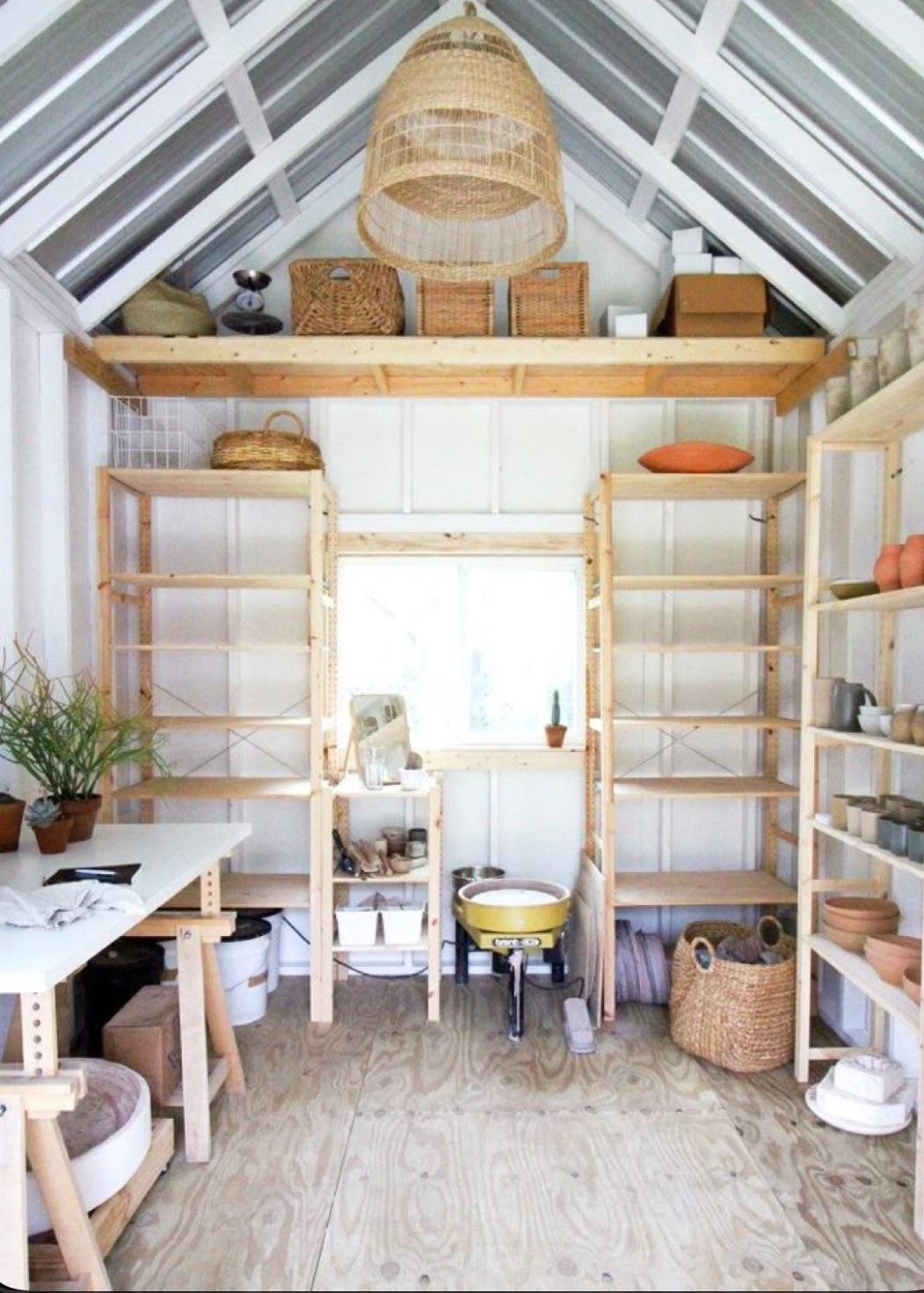
A stable table is the foundation of a small pottery area. The surface should be easy to clean and large enough for wedging, hand-building, trimming, or assembling pieces without constantly moving tools.
Portable boards can make a multipurpose table more practical. They give clay a defined working surface and can sometimes be moved with unfinished work still resting on them.
For the wider room around your workspace, home interior inspiration can be collected separately from the practical decisions required at the clay table itself.
Use Vertical Shelving for Drying Work
Unfinished pottery can occupy large amounts of table space while it dries. Tall shelving makes better use of the room and creates separate levels for projects at different stages.
Choose Shelves You Can Reach Comfortably
A shelf is not useful if lifting a fragile piece onto it feels risky. Keep heavier or frequently handled pieces between comfortable waist and shoulder height whenever possible.
When the studio shares space with a finished room, residential decor references may help with surrounding presentation, while the pottery shelves themselves should remain easy to wipe and practical to access.
| Workspace Area | Main Purpose | Space-Saving Approach |
|---|---|---|
| Clay table | Building and trimming | Use a compact sturdy surface |
| Tool zone | Everyday hand tools | Mount shallow organizers |
| Drying shelves | Works in progress | Build upward vertically |
| Material storage | Clay and supplies | Keep heavy items low |
Keep Tools Close Without Covering the Table
Pottery tools are often small enough to disappear under towels, clay bags, and works in progress. A shallow wall rack, peg system, or narrow drawer can keep everyday tools within reach without taking working surface away.
For larger room organization, practical space ideas can accompany your measurements as you decide where shelves and storage should sit relative to the main table.
Put Heavy Materials Low and Stable
Clay is dense, so storage that looks fine for lightweight craft supplies may not be appropriate for heavier material. Lower shelves reduce the need to lift substantial weight above shoulder level.
Keep the floor path clear around these areas. Carrying clay or fragile pieces through a tight route filled with stools, baskets, and extension cords increases the chance of dropping something.
Where Small Pottery Studios Often Fail
The biggest problem is usually not the amount of equipment. It is allowing every stage of pottery work to spread across the entire room. Clay preparation, forming, drying, tools, and finished pieces gradually take over separate surfaces until none of them works well.
Overfilling shelves causes similar trouble. Pottery needs breathing room while pieces dry and while you handle them. A smaller collection of well-spaced projects can be easier to manage than squeezing maximum capacity from every shelf.
Frequently Asked Questions
Can you make pottery in a small apartment?
Hand-building and other limited pottery activities can fit into a compact area when cleanup, material storage, and drying space are planned carefully. Building rules and equipment requirements should also be considered before adding specialized machinery.
How much table space does a pottery workspace need?
There is no single required size. The surface should accommodate your normal clay project plus the tools needed for that stage without forcing fragile work to the edge.
What is the best way to store pottery tools?
Keep frequently used tools in shallow drawers, small containers, wall-mounted holders, or peg systems near the main work surface. Less-used equipment can move to higher or more distant storage.
Keep the Studio Focused on the Work
A small pottery studio becomes manageable when every activity stays close to its supporting storage. Give clay one dependable work surface, build drying capacity upward, keep tools off the tabletop, and place heavier supplies low. The room does not need to be large; it needs clear zones that make creating and cleaning easier.