
An electric fence is, by its very design, a massive outdoor antenna. Spanning hundreds of meters—or even several kilometers—of elevated metal wire, your perimeter constantly collects static electricity from dry winds and is highly exposed to lightning strikes occurring within several kilometers of your property. Even if a lightning bolt never hits your fence directly, a nearby strike induces a massive electromagnetic surge along the fence wires that travels straight back down the lead-out cables into your energizer.
Without dedicated lightning protection, a single thunderstorm can instantly vaporize an energizer’s internal circuit board, destroy backup batteries, and fry connected alarm panels or CCTV equipment. Below is a complete engineering guide to protecting your electric fence investment from lightning strikes and power grid surges.
1. How Lightning Damages Electric Fence Systems
Lightning does not need to make direct physical contact with your fence to cause catastrophic damage. Electrical surges enter your electric fence system through three distinct pathways:
- Direct Strike to the Fence Line: A lightning bolt strikes a fence wire, post, or tree overhanging the perimeter, sending millions of volts rushing down the wires toward the energizer.
- Induced Electromagnetic Surge (Most Common): Lightning strikes the ground or a tree up to 2 kilometers away. The intense electromagnetic field generated by the strike induces a sudden, massive voltage spike onto your long metal fence conductors.
- Mains Power Grid Surge: Lightning strikes a utility power pole or transformer miles away, sending a destructive voltage spike through the 110V/240V AC wall outlet straight into the back of a mains-powered energizer.
2. Essential Lightning Protection Hardware
Protecting an electric fence requires intercepting high-energy surges before they reach the sensitive electronic components inside the energizer. Professional installations use three coordinated protective devices:
1. Lightning Choke (Inductor Coil)
A lightning choke is a tightly wound coil of heavy-gauge insulated wire installed inline between the fence perimeter and the energizer’s output terminal.
- How It Works: Under normal operation, the energizer’s relatively slow pulse (occurring once per second) passes smoothly through the choke with virtually zero resistance. However, a lightning surge travels at an ultra-high frequency. To that high-frequency surge, the coiled wire acts like a brick wall (high inductive impedance), slowing the surge down and forcing it backward toward the lightning diverter.
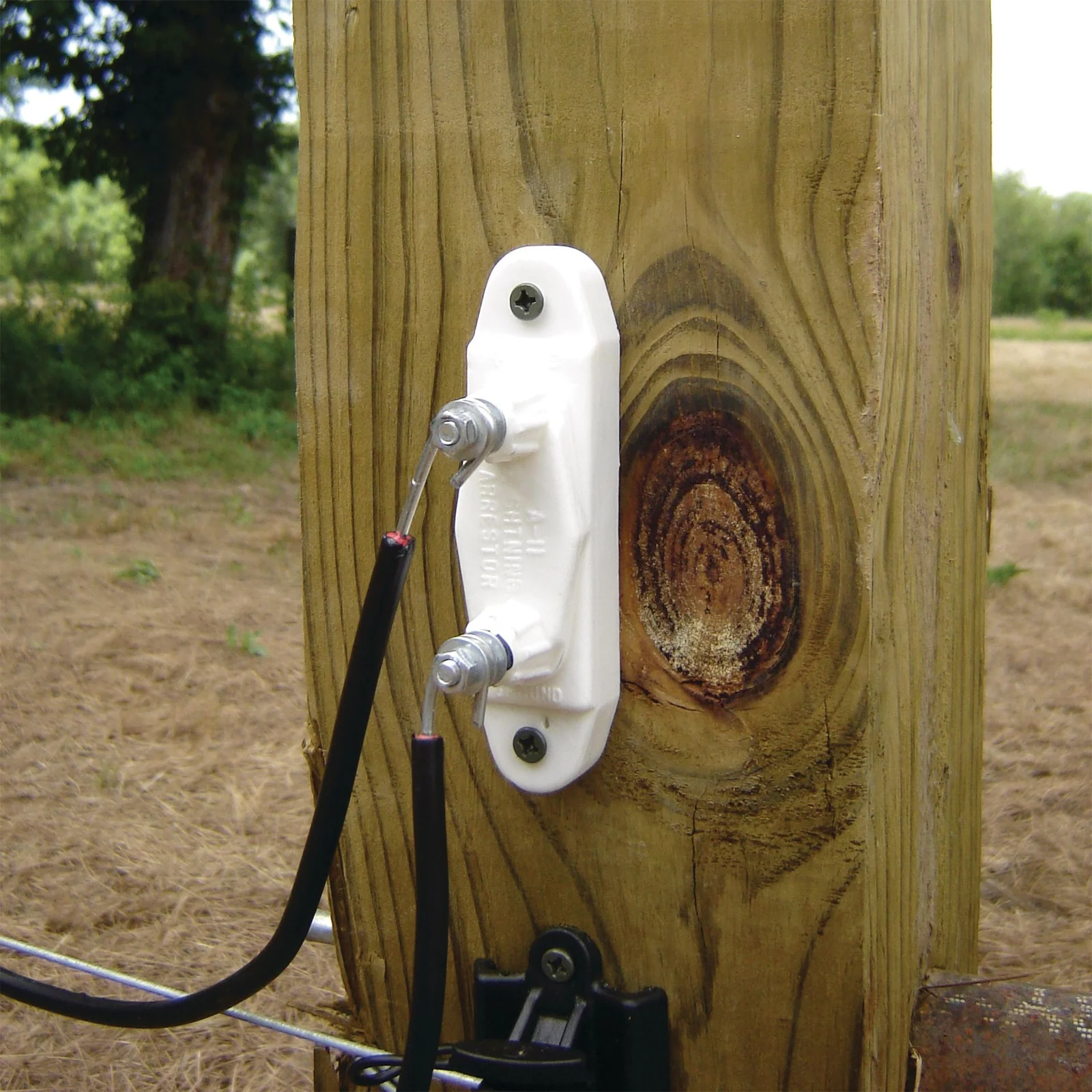
2. Lightning Diverter (Spark Gap Arrestor)
A lightning diverter sits between the fence line and a dedicated earth ground rod, positioned just ahead of the lightning choke.
- How It Works: The diverter features a precisely calibrated air gap or gas discharge tube. Normal 8,000V fence pulses cannot jump across this gap, so they continue safely down the fence line. When a massive 50,000V+ lightning surge hits the line and gets blocked by the choke, the extreme voltage arcs across the diverter gap and drains straight into the earth—bypassing the energizer completely.
3. Mains AC Surge Arrestor
For mains-powered energizers, installing a heavy-duty AC surge protector at the wall outlet—or a Type 2 surge protective device (SPD) inside the distribution board—blocks utility grid spikes from entering the energizer through its power cord.
3. Proper Installation Sequence: The Golden Rule
Installing a lightning diverter and choke in the wrong order renders them completely useless. Current traveling from the fence toward the energizer must hit the diverter first and the choke second:
$$\text{Fence Perimeter} \longrightarrow \text{Lightning Diverter (to Ground)} \longrightarrow \text{Lightning Choke} \longrightarrow \text{Energizer}$$
Step-by-Step Wiring Best Practices
- Install Outside the Building: Always mount the lightning diverter and choke on the exterior wall of the building—never inside your garage, utility room, or house. If a massive surge arcs across the diverter, it generates intense heat and sparks; keeping it outdoors eliminates fire hazards inside your home.
- Use a Dedicated Lightning Earth Rod: Connect the ground terminal of the lightning diverter to its own separate earth rod driven at least 1.8 to 2.0 meters into moist soil. Do not connect the lightning diverter directly to your main fence earth bed or your home’s electrical earth system, as the surge will simply backfeed into the energizer through the earth terminal.
- Maintain Distance from Main Earth: Keep the lightning diverter’s earth stake at least 3 to 5 meters away from the energizer’s main grounding rods.
- Eliminate Sharp Bends in Ground Wires: Lightning surges travel at extreme frequencies and resist turning sharp 90-degree corners. Route the wire from the diverter down to its earth rod in a straight, smooth path with gentle curves.
4. Built-In Isolation for Large Multi-Zone Perimeters
On extensive commercial estates, agricultural ranches, or wildlife boundaries spanning several kilometers, a single lightning strike can generate energy beyond what one diverter can absorb. High-risk installations incorporate additional structural safeguards:
- Physical Fence Breaks (Cut-Off Switches): Install weatherproof cut-off switches every 500 to 1,000 meters along long fence runs. During severe electrical storms or seasonal maintenance, isolated sections can be disconnected to limit surge exposure.
- Sacrificial Lead-Out Loops: Professional installers often leave a deliberate 1-meter service loop of high-voltage lead-out cable right before the diverter. In a direct hit, this loop acts as a sacrificial fuse, vaporizing cleanly to break the physical bridge before energy reaches the building wall.
- Solar Panel Surge Isolation: On off-grid solar electric fences, install DC surge arrestors between the solar panel and the solar charge controller, and ensure the metal solar mounting pole is properly grounded.
5. Post-Storm Inspection Checklist
Many property owners assume their lightning diverter is still working after a major thunderstorm simply because the fence is still ticking. However, heavy surges can silently fuse spark gaps or burn out internal surge components, leaving your system completely defenseless against the next storm.
After any severe lightning storm in your area, perform a quick five-minute inspection:
| Component | What to Inspect | Action Needed if Damaged |
| Lightning Diverter | Look for black soot, melted plastic, pitted brass plates, or burnt odor around the spark gap. | Clean minor carbon buildup with fine sandpaper; replace the diverter immediately if plates are melted or fused. |
| Lightning Choke | Inspect the coiled wire insulation for blistering, cracking, or heat discoloration. | Replace the choke if insulation is compromised or if fence voltage drops noticeably across the coil. |
| Energizer Output | Check live and return voltage indicators on the energizer or with a digital voltmeter. | If voltage reads zero or fails to pulse after storm surges, inspect internal fuses or send the board for repair. |
| Earth Connections | Verify that the clamp on the diverter’s dedicated earth rod is tight and uncorroded. | Tighten loose clamps and clear any debris washed over the earth connection by heavy rain. |