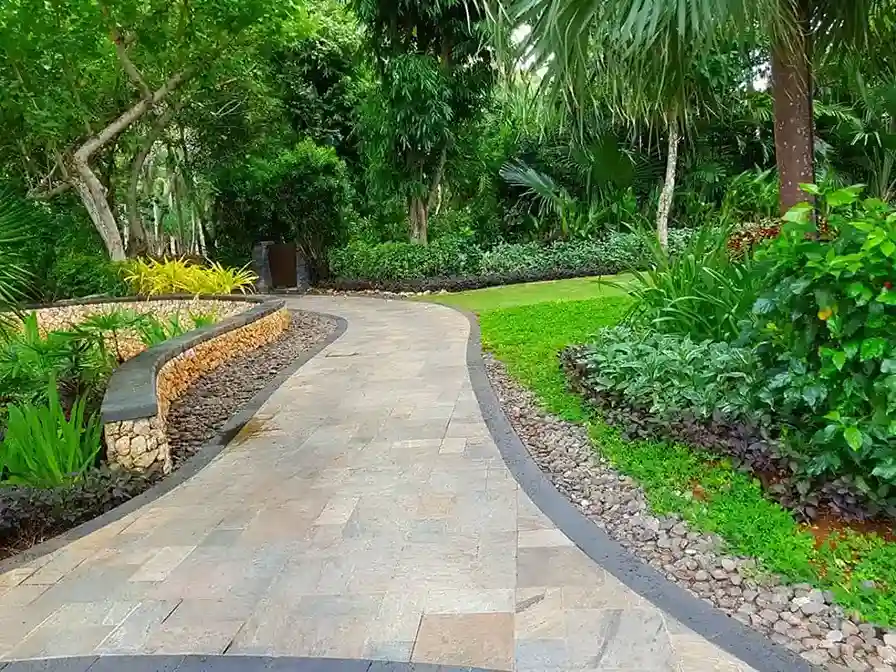
A path doesn’t have to send every drop of rain toward the nearest low point. Permeable surfaces allow at least some water to pass through or between surface materials, helping reduce concentrated runoff around patios, gardens, sheds, and other outdoor spaces.
Useful permeable path ideas balance drainage, walking comfort, maintenance, and the way the path will actually be used.
Match the Surface to the Path’s Purpose
A lightly used garden route can tolerate a looser surface than a main walkway used every day. Gravel, spaced pavers, permeable paving systems, and other open-joint surfaces each behave differently.
Think about wheelbarrows, strollers, accessibility needs, furniture movement, and winter maintenance before selecting material solely for appearance.
Start With a Stable Base
Permeability doesn’t mean placing decorative stone directly on soft soil. A poorly prepared base can settle unevenly, create puddles, and allow materials to migrate.
Good construction supports the surface while still giving water somewhere to move beneath it.
Connect Paths With the Surrounding Hardscape
A permeable path is most useful when adjoining surfaces also direct water sensibly. A patio that slopes heavily toward the path may overwhelm a small infiltration zone during strong rainfall.
People reviewing outdoor hardscape ideas should consider drainage whenever several paved features are being connected within the same yard.
Small elevation differences can determine whether water enters the permeable area or bypasses it entirely.
| Path Surface | Main Strength | Possible Limitation |
|---|---|---|
| Loose gravel | Simple drainage | Can migrate |
| Spaced pavers | Stable footing | Joints need care |
| Permeable pavers | Structured surface | Base preparation matters |
| Stepping stones | Minimal coverage | Less convenient for wheels |
Use Planting to Soften the Edges
Groundcovers and low planting can help a path blend into garden areas, especially where spaced stones or gravel create an informal appearance.
A design influenced by cottage-style outdoor design may pair particularly well with permeable surfaces because slight irregularity can feel intentional rather than unfinished.
Keep aggressive roots and spreading plants from closing joints or creating tripping hazards.
Consider Where Infiltrated Water Goes
Water passing through the surface still needs suitable soil or drainage layers below. Extremely compacted ground or poorly draining subsoil may limit how quickly the area absorbs rainfall.
Looking at property surface planning as part of the larger yard layout helps coordinate pathways with grading, structures, gardens, and drainage routes.
In difficult sites, a permeable surface may need to work with another drainage system rather than acting as the only solution.
Where Permeable Paths Can Disappoint
Calling a surface permeable doesn’t guarantee good drainage. Fine sediment can clog open joints, poorly graded bases can hold water, and loose gravel can wash away on steep slopes.
Another mistake is expecting a narrow path to absorb runoff from a large roof or patio without checking capacity. Permeable areas work best when runoff reaching them is reasonable and the underlying layers can accept or redirect water.
Maintenance matters too; clogged joints gradually reduce performance.
Frequently Asked Questions
Is gravel considered a permeable path surface?
Gravel can allow water to move through the surface when installed over an appropriate permeable base. Compacted fines, underlying plastic, or poorly draining soil can greatly reduce that benefit.
Are permeable pavers better than regular pavers for drainage?
They can reduce surface runoff when the entire system—including joints, bedding, base layers, and subsoil—is designed for infiltration or drainage. Surface material alone doesn’t determine performance.
Can a permeable path prevent all yard puddles?
No. It may reduce runoff in the immediate area, but puddles caused by poor grading, groundwater, compacted soil, or large volumes of incoming water may require additional drainage measures.
Design the Path as Part of the Drainage Plan
Permeable paths work best when they’re treated as more than decorative surfaces. Choose materials for how people will use the route, prepare a stable water-friendly base, and study where runoff arrives from surrounding areas. A thoughtfully placed path can improve circulation through the yard while helping rainfall spread and soak in rather than collecting beside outdoor spaces.